Life is unpredictable, full of incidents such as fire, theft, burglary, property damage, or natural calamities. But apart from all this, some incidents are deliberately caused just to get illegal financial gain; this is insurance fraud. It is not something you commit, but it could be committed against you. Some people crash their own cars, torch their own basements, and steal their own assets to claim for insurance. The news you read in a newspaper about a millionaire’s stolen watch or a stolen yacht is all a pre-planned theft. These absurd crimes are all committed deliberately when they are facing financial losses.
The penalty for this act is severe, but honest customers are also targeted with trust issues. Because for every fraud committed by one person, the insurance company raises everyone’s prices to cover up for the losses. Understanding the fraud in insurance is important for everyone, as this is not something that affects one person, but the whole system is affected by it.
WHAT IS INSURANCE FRAUD
Just as the insurance industry is growing, so is insurance fraud. Fraud can be committed from various sources, including your medical bills, repair shop bills, your agents, contractors, and even, at times, insurance companies themselves. Some people feel like this fraud is being committed by rich or upper-class people, but in reality, the whole system pays a price for this cause. And with a pace it is growing, it is very difficult to detect, but everyone needs to be aware of it to protect themselves and others.
TYPES OF FRAUDS
To understand insurance fraud better, let’s dive deep into it with its types:
- HARD FRAUD:
Hard fraud involves deliberately planning or staging an accident to obtain the maximum insurance amount; it is often staged by organized criminal networks. It involves:
- Pre-planning and calculation
- The accident was caused intentionally
- Faking your own death
- Making fake medical bills and treatments
- Damaging your own property
- SOFT FRAUD
Soft fraud or opportunistic fraud is claiming a legitimate cause by over exaggerating or lying about an injury or damage. It includes:
- Usually unplanned
- An accident is real, but the claim is overstated
- Overreporting stolen items
- Exaggerating an injury
Despite being both types comparatively different, they are still both deceptive and share a common ground of manipulation.
RED FLAGS TO SPOT
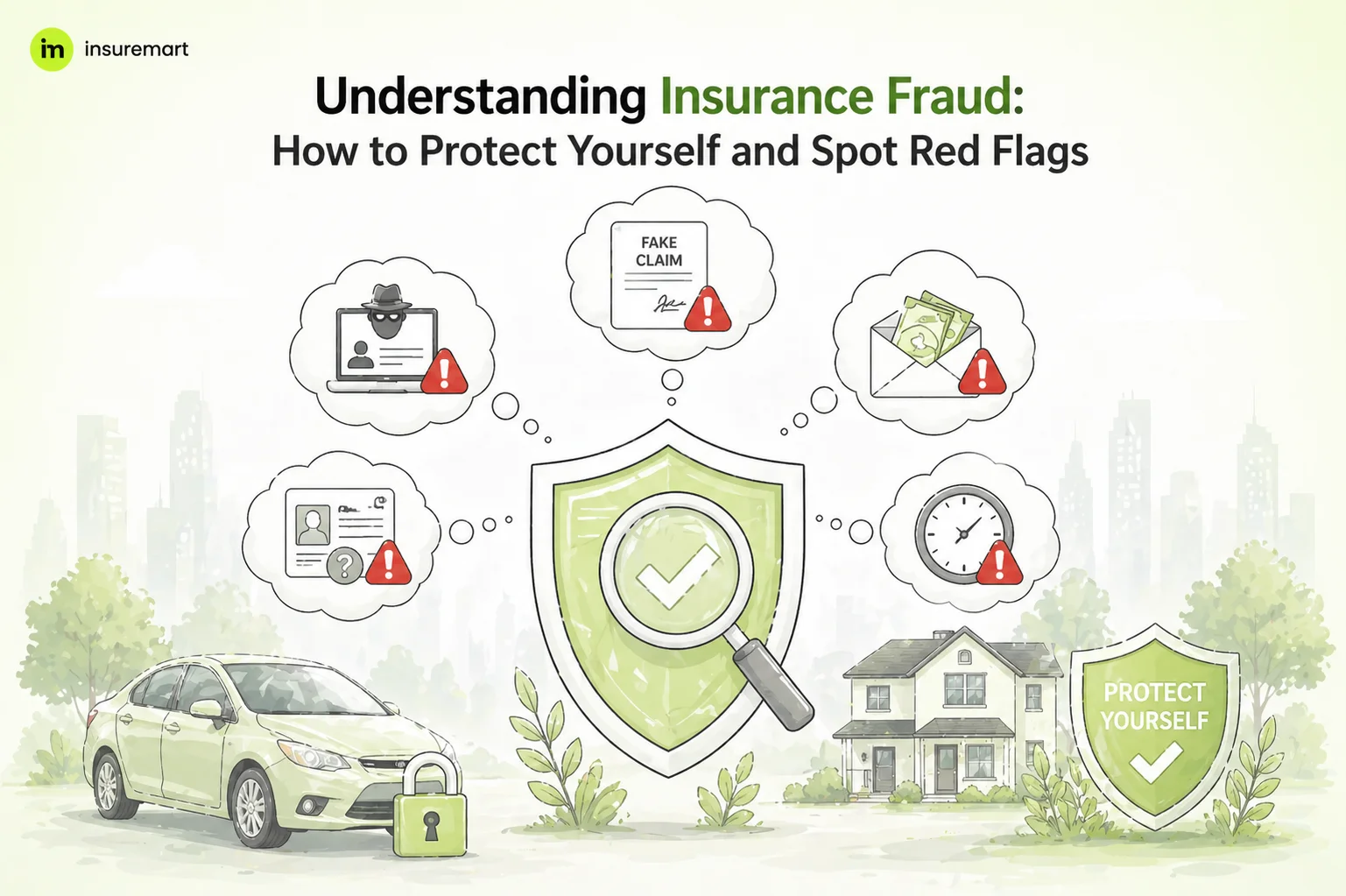
You can protect yourself from fraud if you are aware of these two things: fraud committed against you (by scammers) or the fraud you might accidentally commit (exaggerating a claim). Remember, fraudsters are not always after the insurance company; sometimes they are after you. Here is a breakdown of how you can detect some red flags in this fraud industry:
- “TOO GOOD TO BE TRUE” DEALS
After a car accident, a repair shop you have never heard of calls you and offers you that “we’ll compensate your losses, just don’t call your insurance company.” They are not being nice; they are the fraudsters who will bill you for an expensive repair. That’s why call your insurance company or your trusted repair shop.
- UNUSUAL CLAIM BEHAVIOUR
You went to a physiotherapist for a sore elbow, but the clinic charged you for an unusual amount of expensive treatments you didn’t have. Here, the clinic is lying to get more money out of you. So it is always suggested to read every word of your forms carefully, and if you notice anything wrong, call your insurance company and ask them about it.
- UNDER PRESSURE TACTICS
You got a call from a scammer claiming that he has a discounted life insurance offer for you, and he created urgency that if you don’t sign now within an hour, it will expire. And before you verify it, they may give you threats of cancellation or legal action. So it is important not to trust such calls and verify with your insurance helpline.
- UNSOLICITED OFFERS
You received a call, email, or text from a self-proclaimed ‘agent’ or ‘broker’ you have never contacted. They ask you to click on a quote and add your credit card information. It is always better to be cautious of such tactics of scammers because legitimate companies do not ask for your personal information.
- SUSPICIOUS PAYMENT METHODS
Reputable companies will always deal with you in authorized payments and will never accept gift cards, wire transfers, or cryptocurrency. So always be aware of these suspicious payment methods.
- AGENT IMPERSONATION
Fraudsters often pose as employees and call you from similar-looking numbers of branding or government agencies. Remember not to trust anyone with your private information, or do not send them any code sent to you by regular email.
Also Read: 10 Ways to Get Cheap Car Insurance Quotes Without Sacrificing Coverage
HOW TO PROTECT YOURSELF
It is very apparent that the fraud industry is growing at a high rate. But you don’t have to be a detective to protect yourself. If you are aware of the fraud that the fraudsters commit, you are safe. It is suggested to follow these habits:
- VERIFY THE SOURCE
Never click on unknown links or quotes sent to you via email or message. Always reach out to your insurance company’s helpline number.
- NEVER PAY CASH
At the time of insurance payment, never pay in cash, gift card, or cryptocurrency. Always pay through your credit card to keep track of your payments. And keep the proofs with you in a folder.
- PROTECT PERSONAL INFORMATION
If you get a call from a fraudster, don’t share your personal information like security code, identity card number, your passwords, or any other bank details.
- READ THE FINE PRINT
In your contracts, always read the protocols, cancellations, returns, or check out for any hidden fees to avoid anything that traps you. And always follow the rules, ethics, and laws to avoid any violation.
- USE SECURE CHANNELS
At the time of contacting your company, look out for secured helpline numbers or visit the website that starts with https:// or look out for a padlock icon.
- BE WARY OF CONTRACTORS
Say no to any door-to-door insurance agents, or ask for a legal license, or written statements as proof to avoid any misconduct.
WHAT TO DO IF YOU SUSPECT FRAUD
Follow these two steps if you suspect fraud:
- KEEP YOUR RECORDS
Make a file of your records, the photos, videos, receipts, bills, statements, repair reports, and police reports. These are your evidence that really proves what happened, and you might be able to get your claim.
- CONFIRM DIRECTLY
If you notice something, contact your insurance company’s help line and confirm the information directly, and read your paperwork carefully, just like you read your bank statement, to be on the safe side.
CONCLUSION
Insurance is for your own benefit and for your and your family’s future to be secured, but every good thing comes with a red flag. As long as you follow the above steps to spot the red flags of insurance fraud and are aware of the fraudsters, you are safe. So be honest on your application, read your paperwork carefully, and always contact your insurance company if you see anything that doesn’t seem right. Always remember, if you are cheating with your insurance company, you are cheating with your own money.
Also Read: Is Digital Insurance as Secure as Traditional Insurance?
Frequently Asked Questions
1. How can I confirm if an insurance agent is real or a fraudster?
Always ask for their official employee ID and the company’s license number. You should never take their word for it; call the company’s official head office number (found on their verified website) and ask them to verify the agent’s name and code. In Pakistan, you can also check the IFMP (Institute of Financial Markets of Pakistan) portal to see if they are a certified agent.
2. Is it safe to pay my insurance premium in cash?
No. Avoid paying premiums in cash to an agent. Always pay via Crossed Cheque or Pay Order made out specifically to the insurance company’s name (e.g., “State Life Insurance Corporation” or “EFU Life”). If paying online, only use the company’s official app or web portal. Never send money to an agent’s personal Easypaisa, JazzCash, or bank account.
3. What should I do if my insurance claim is being unfairly rejected?
First, file a formal complaint with the insurance company’s Grievance Redressal Officer. If they don’t resolve it within 15-30 days, you can file a free complaint with the Federal Insurance Ombudsman (FIO). They have the power to force companies to pay legitimate claims.